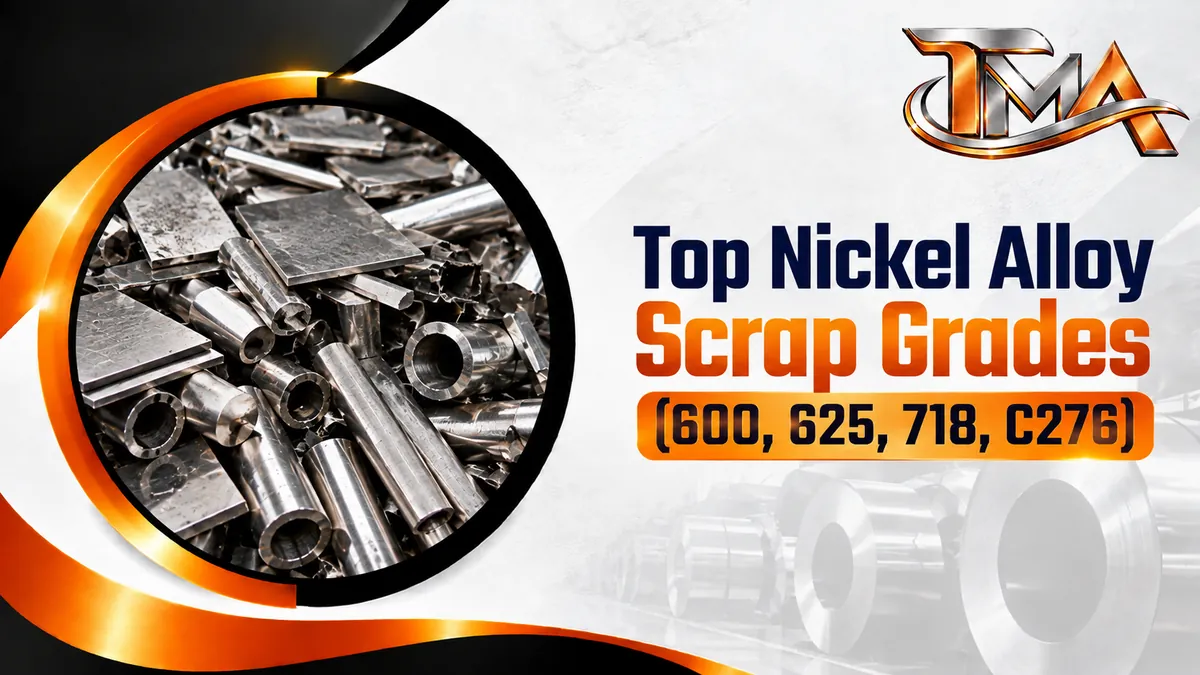
Top Nickel Alloy Scrap Grades (600, 625, 718, C276)
In the world of high-performance metals, nickel alloy scrap plays an important role in recycling, reducing material waste and supporting resource recovery. Industries such as aerospace, petrochemical, marine, chemical processing and power generation use nickel alloys for their strength, corrosion resistance and heat tolerance. For buyers, sellers and traders, understanding the top nickel alloy scrap grades and how to source them is essential.
Whether you're searching for Inconel 600 scrap buyers, Inconel 625 scrap suppliers or information about Inconel scrap price per kg, this guide explains commonly traded grades and important sourcing considerations.
Why Nickel Alloy Scrap Matters
Nickel alloys are engineered materials designed to withstand demanding environments. Components made from these alloys may enter recycling streams after replacement, maintenance or decommissioning. Their recoverable metal content makes correct identification and sorting important.
With fluctuating metal prices, understanding the factors that influence scrap value and building reliable supplier networks can help procurement and recycling businesses make informed decisions.
Top Nickel Alloy Scrap Grades
The following are commonly recognized nickel-based alloy families. Their exact properties and applications depend on the grade and specification.
1. Inconel 600 Scrap
Inconel 600 is a nickel-chromium alloy known for oxidation resistance and performance at elevated temperatures. It is used in selected heat-treatment, chemical-processing and industrial applications.
- Key properties: Nickel-chromium composition, oxidation resistance and suitability for selected high-temperature environments.
- Typical applications: Furnace equipment, heat-treatment systems and chemical processing equipment.
- Scrap value: Depends on verified composition, cleanliness, quantity and prevailing market conditions.
Where to source: Industrial offcuts, decommissioned equipment and machining waste may be potential sources. Buyers should verify the grade before agreeing on a price.
2. Inconel 625 Scrap
Inconel 625 is a nickel-chromium-molybdenum alloy with niobium additions. It is known for high strength and corrosion resistance in demanding environments.
- Key properties: Corrosion and pitting resistance, mechanical strength and good fabricability.
- Typical applications: Marine equipment, chemical-processing systems, aerospace components and selected oil and gas equipment.
- Scrap value: Depends on alloy composition, material condition, available quantity and buyer specifications.
Where to source: Buyers can enquire with specialist alloy recyclers and industrial scrap suppliers. Request grade verification and relevant material documentation where available.
3. Inconel 718 Scrap
Inconel 718 is a nickel-based precipitation-hardenable alloy valued for its strength and resistance to creep and fatigue at elevated temperatures. It is used in aerospace and power-generation applications.
- Key properties: High strength, fatigue resistance and performance under demanding temperature conditions.
- Typical applications: Gas-turbine components, aerospace equipment and high-stress industrial parts.
- Scrap value: Depends on verified grade, material history, condition and market demand.
Where to source: Specialized alloy recyclers and industrial suppliers may handle Inconel 718 scrap. Correct segregation is important because different alloy grades should not be assumed interchangeable.
4. Hastelloy C276 Scrap
Hastelloy C276 is a nickel-molybdenum-chromium alloy designed for excellent corrosion resistance in a range of aggressive chemical environments.
- Key properties: Resistance to many corrosive environments and suitability for selected chemical-processing duties.
- Typical applications: Chemical reactors, heat exchangers, pollution-control systems and process equipment.
- Scrap value: Depends on the verified grade, condition, quantity and current market demand.
Where to source: Specialist alloy traders and recycling businesses may handle this grade. Request appropriate material identification before completing a transaction.
How to Choose the Right Supplier
When sourcing nickel alloy scrap, material identification and traceability are important. Consider these checks before purchasing:
1. Verify Alloy Identification
Confirm the required alloy grade and request suitable chemical analysis or material documentation where available. Do not rely only on visual appearance to identify an alloy.
2. Compare Quotations
Compare quotations from multiple suppliers. Prices may vary according to composition, quantity, location, processing requirements and market conditions.
3. Check Supplier Reliability
Review the supplier's business details, material descriptions, transaction terms and ability to provide relevant records.
4. Confirm Logistics and Documentation
For international transactions, clarify packaging, transport, customs documentation and any applicable export or import requirements before finalizing an order.
Contact Tirupathi Metal Alloys
If you're buying or selling nickel alloy scrap, prepare the grade, estimated quantity, material condition and delivery location before requesting a quotation. These details help suppliers evaluate your enquiry.
Contact Tirupathi Metal Alloys to discuss your requirements and enquire about available material options.
Contact Us