What Is Monel Scrap, and Why Is It Valuable for Exporters?
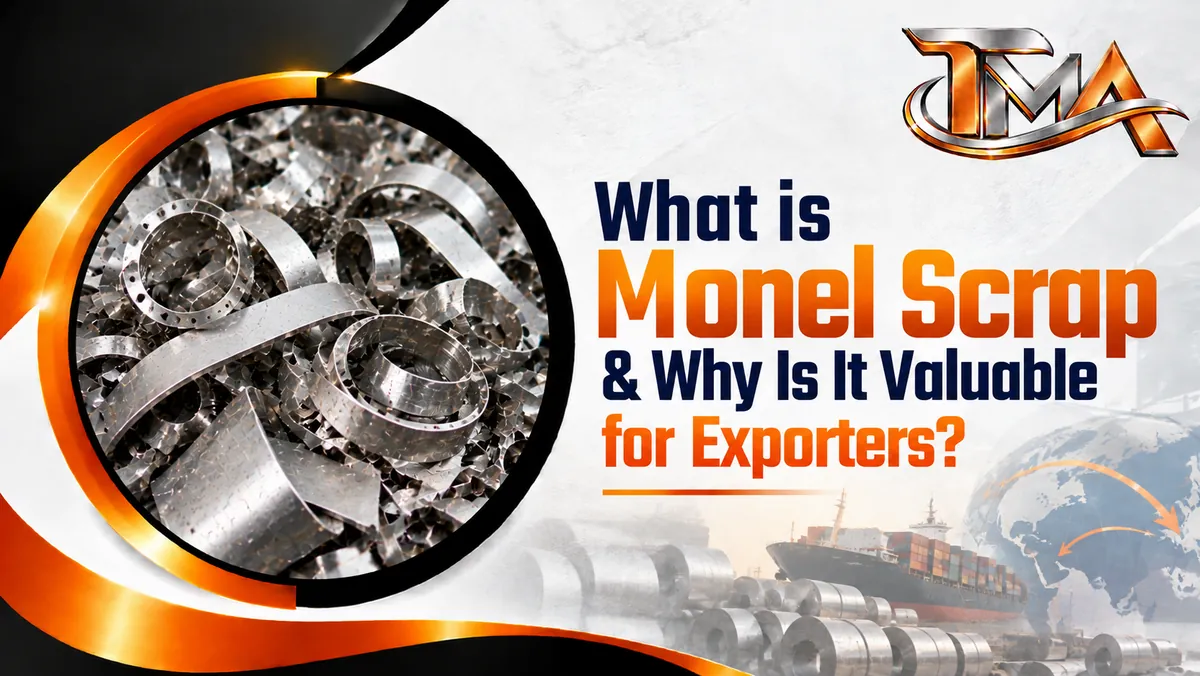
Monel refers to a family of nickel-copper alloys, commonly associated with high nickel content and significant copper content, along with smaller amounts of other elements. These alloys are valued for their corrosion resistance and performance in demanding environments.
Monel scrap refers to discarded, leftover or off-cut pieces of these alloys, including sheet off-cuts, machining turnings, castings and rejected components. Recycling suitable material helps recover valuable metals and reduces waste.
Why Monel Scrap Is Beneficial for Exporters
There are several reasons Monel alloy scrap attracts attention in the global marketplace.
1. High alloy value – Monel contains valuable nickel and copper. Its commercial value depends on the specific grade, composition, condition and prevailing metal market prices.
2. Strong resistance to corrosion and demanding environments – Monel alloys are used in selected marine, chemical-processing and industrial applications where corrosion resistance is important.
3. Recycling saves resources – Recovering nickel and copper from suitable scrap can reduce the need for primary raw materials and support more efficient material utilisation.
4. Global demand for speciality alloys – Applications in marine engineering, oil and gas, and chemical processing contribute to the demand for nickel-copper alloys and their recoverable scrap.
These factors can create opportunities for exporters capable of sourcing, sorting, identifying and preparing suitable Monel scrap for overseas buyers.
Gains of Exporting Monel Scrap from India
Exporters operating in India may benefit from established industrial scrap sources and access to international shipping networks.
Readiness of scrap sources and pricing – Industrial machining and manufacturing operations can generate nickel-copper alloy off-cuts. Exporters must verify the grade, quantity and commercial viability before assembling export lots.
Processing and labour costs – Sorting, inspection and preparation costs influence the final export economics. Actual savings depend on operating costs, shipment size and destination.
Trade policies – Exporters should confirm applicable Indian export rules, customs procedures and destination-country import requirements before dispatch.
Brand reputation – Consistent material identification, transparent communication and reliable documentation can help exporters build lasting buyer relationships.
Currency and margins – Exchange-rate movements, freight, insurance, duties and processing costs all influence export profitability.
Sustainability – Responsible scrap recovery supports resource efficiency by keeping reusable metals in the recycling supply chain.
Global Demand for Monel Alloy Scrap
Demand for Monel alloy scrap is influenced by manufacturers and recyclers seeking suitable secondary material for industrial applications and metal recovery.
Marine and offshore sectors: Selected marine components, pumps, valves and other equipment use nickel-copper alloys because of their corrosion-resistant properties.
Oil, gas and chemical processing: Certain applications require materials that perform reliably in demanding operating environments.
Speciality alloy recycling: Specialist recyclers may purchase identified Monel scrap, subject to grade, composition, cleanliness and processing requirements.
Buyers may seek grades such as Monel 400 and Monel K-500. The acceptance criteria and commercial value vary between buyers and applications.
Exporters in India can explore potential markets in Asia, the Middle East, Europe and North America, subject to buyer demand, shipping economics and applicable trade requirements.
Monel Scrap Grades & Forms
Understanding the grade and form of Monel scrap is important for both exporters and buyers. Commonly referenced materials include the following.
Monel 400 – A nickel-copper alloy widely used for its corrosion resistance and useful mechanical properties. Scrap should be identified and assessed according to its actual composition.
Monel K-500 – A precipitation-hardenable nickel-copper alloy containing additions that provide higher strength than Monel 400 in appropriate heat-treated conditions.
Monel R-405 – A free-machining variation of Monel 400 developed for improved machinability in suitable manufacturing applications.
Monel scrap may be available as machining turnings, sheet or plate off-cuts, castings, rejected parts, pipe sections and other manufacturing leftovers.
Before exporting, confirm the material grade and condition. Keep different alloys separated and disclose any contamination or uncertainty in material identification.
Role of Tirupathi Metal Alloys in Monel Scrap Exports
International trade in Monel scrap requires clear communication between suppliers, processors, exporters and buyers. Material specifications and documentation should be agreed upon before a shipment is finalised.
When evaluating a Monel scrap supplier, buyers should ask about available grades, quantities, material condition, inspection arrangements and shipping terms.
Product enquiries should identify whether the requirement is for Monel 400, K-500, R-405 or another nickel-copper alloy. This helps prevent grade mismatches and misunderstandings during procurement.
Tirupathi Metal Alloys can use these requirements as the basis for discussing relevant product availability and potential commercial arrangements.
Key Exporter Points & Best Practices
When exporting Monel scrap or other speciality alloys, consider the following practical steps.
1. Material Identification & Purity
Confirm the grade, such as Monel 400 or K-500, and check that the scrap is appropriately separated from other alloys and unwanted attachments.
Provide chemical composition certificates or test reports when available and required by the buyer.
2. Quality Preparation
Remove unsuitable non-metallic attachments and prepare the scrap according to the buyer's specifications and applicable safety requirements.
Sort the material by grade and form, and package it in a manner suitable for handling and transport.
3. Documentation & Certification
Prepare accurate records covering material description, grade where verified, origin, quantity and weight. Supply inspection reports and other supporting documents where applicable.
Confirm the required customs declarations, tariff classification and export documentation before dispatch.
4. Logistics & Shipping
Choose shipping routes and carriers suitable for the shipment's weight, dimensions and destination. Compare packaging, freight, insurance and port handling costs when preparing a quotation.
Confirm the destination country's import conditions and any applicable environmental or waste-shipment requirements.
5. Start Buyer Relationships
Identify buyers whose material specifications match the available scrap. Build confidence through consistent quality, transparent communication and realistic delivery commitments.
Export quotations should account for material value, processing, packaging, freight, insurance, duties where applicable and agreed delivery terms.
6. Monitor Market Pricing
Monitor relevant nickel and copper market indicators and obtain current quotations from suitable buyers. Monel scrap prices can vary with grade, composition, cleanliness, quantity and regional demand.
Avoid relying on an old price example as a current market quotation. Confirm pricing close to the transaction date.
7. Environmental Responsibility & Compliance
Maintain appropriate records of material origin, inspection and shipment details. Follow applicable environmental, customs and export requirements.
Accurate material descriptions and responsible recycling practices support trust throughout the supply chain.
Conclusion: Why Trade Monel Scrap from India?
Exporting Monel alloy scrap from India may offer opportunities for businesses able to source suitable material, verify its grade, prepare consistent shipments and meet buyer requirements.
The commercial outcome depends on material quality, nickel and copper prices, processing expenses, freight, documentation and destination-market demand. Careful planning is therefore essential before committing to an export transaction.
Whether you are a scrap collector, processor, supplier or international buyer, understanding Monel grades and export requirements can help improve sourcing decisions and reduce avoidable transaction risks.
Contact Tirupathi Metal Alloys to discuss your nickel-copper alloy scrap enquiry.
Contact Us